Badge
How Powerplay Helped Barrett Generate $2.43M in Pipeline in 90 Days
While Barrett's flagship stroke rehabilitation device, Burt, had strong clinical validation, the Boston-based startup faced the classic challenge of scaling in a crowded U.S. market: limited awareness, entrenched hospital procurement systems, and a lean commercial team without the bandwidth to scale and convert outreach.
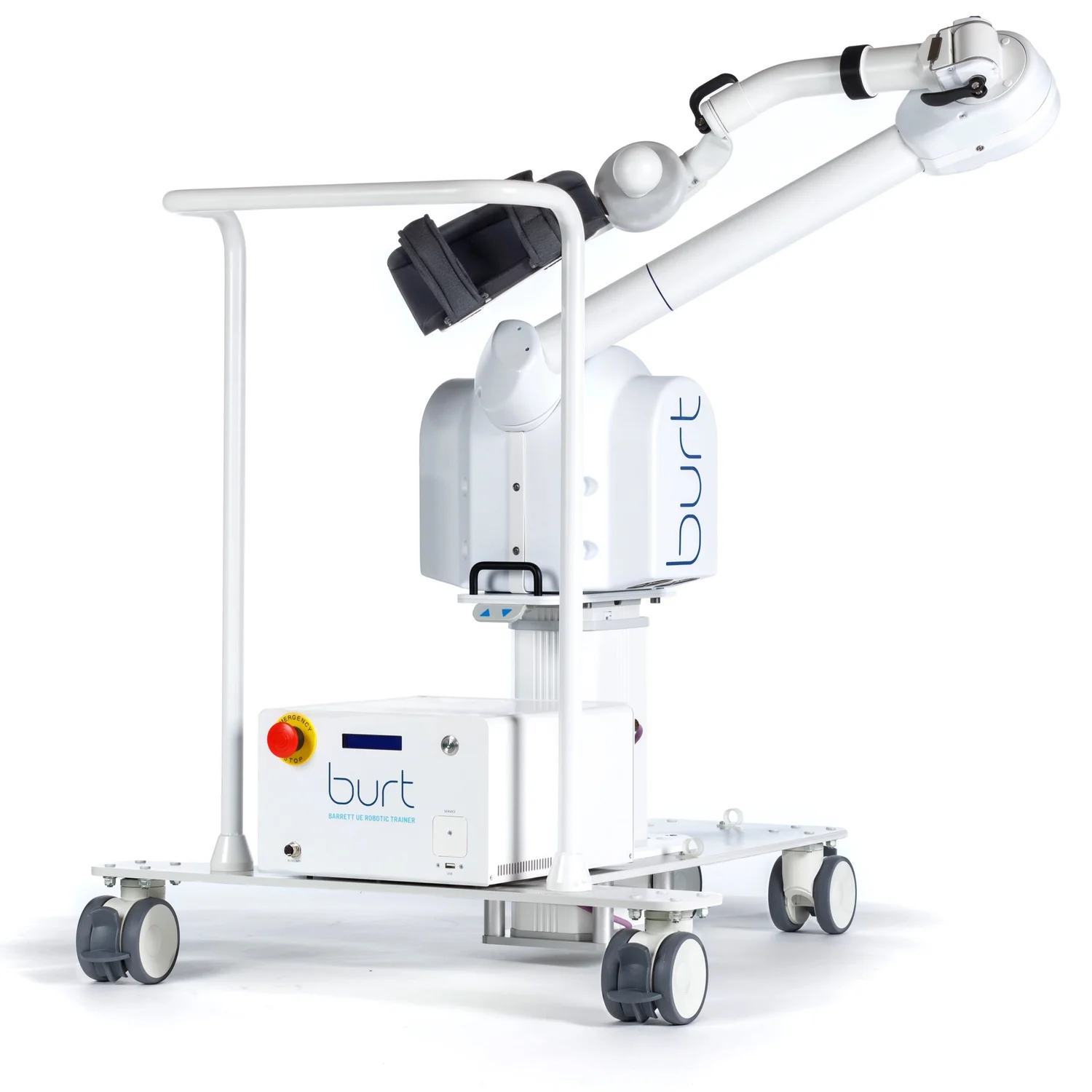
When Barrett Medical developed Burt®, a breakthrough orthopedic rehabilitation device designed to shorten recovery times and reduce costs for both clinics and patients, it thought it had an instant in with Rehab Directors and Physical Therapists around the U.S.
But while the device had strong clinical validation, Barrett faced the classic challenge of scaling in a crowded U.S. market: limited awareness, entrenched hospital procurement systems, and a lean commercial team without the bandwidth to scale and convert outreach.
“Our product was ready and our pilots were successful. But we didn’t have a playbook for scaling sales in the U.S. Powerplay became that playbook.”
— Bill Townsend, Founder & CEO, Barrett Medical
The Startup
Barrett Medical is an innovation-driven medical device company pioneering rehabilitation and orthopedic care with its flagship device, Burt. Burt allows a patient to float weightlessly on a cushion of air, supporting the patient while applying gentle forces to resist, assist, give subtle queues, and paint a realistic game/activities environment that matches what is visually projected in front of them.
With FDA clearance, a killer product, and multiple successful pilot programs, the company was primed to expand into U.S. clinics, hospitals, and rehabilitation centers.
The Opportunity
Despite strong product-market fit, Barrett’s U.S. commercialization faced several hurdles:
Fragmented buyer landscape: Hospital procurement, orthopedic surgeons, and rehab directors all needed to be convinced simultaneously.
Overextended team: Barrett had a small commercial unit focused on pilots and KOL engagement, leaving little capacity for outbound sales development.
Competitive noise: Larger incumbents were flooding the market, making differentiation critical.
Barrett needed a scalable go-to-market system that could quickly identify, engage, and convert U.S. decision-makers — without the long ramp time and cost of building an outbound motion or internal sales development team.
Powerplay helped Barrett build pipeline in 3 critical ways:
1. Identifying the right accounts
To guide U.S. commercialization, Powerplay mapped Barrett Medical’s total addressable market into five high-potential buyer segments:
ICP Segment | Buyer Role | Region Focus | TAM Estimate |
|---|---|---|---|
Hospital Rehabilitation Departments | Directors of Rehabilitation, Chief of PT, Procurement Directors | United States | ~7,500 hospitals with rehab units |
Outpatient Rehabilitation Clinics & Chains | Clinic Owners, Directors of PT, Practice Administrators | United States | ~33,000 outpatient rehab clinics |
Orthopedic & Sports Medicine Practices | Orthopedic Surgeons, Sports Medicine Directors, Practice Managers | United States | ~20,000 practices |
Long-Term Care / Skilled Nursing Facilities (SNFs) | Directors of Nursing, Rehab Directors, Administrators | United States | ~15,000 SNFs with rehab services |
Regional MedTech Distributors | CEOs, Regional Sales Directors, VPs of BD | United States | ~1,200 specialized distributors |
This analysis gave Barrett focus: hospitals and outpatient rehab centers as initial commercialization targets, with distributors and SNFs serving as accelerators and long-term expansion opportunities.
“Powerplay didn’t just open doors—they gave us a repeatable path into some of the toughest buyers in healthcare. We now feel like we can compete head-to-head with anyone in our space.”
— Bill Townsend, Founder & CEO, Barrett Medical
Positioning Burt as a game-changer
One of the biggest challenges in commercializing new rehab tech is cutting through skepticism. Hospitals and clinics are inundated with “innovations” that rarely deliver. Powerplay worked with Barrett to ensure Burt® was positioned not as another device, but as a measurable advantage in outcomes and economics.
We did this buy crafting ICP-segmented messaging like:
For Hospitals: Reduced readmission rates, lower total cost of care, improved patient satisfaction scores tied to CMS reimbursement.
For Outpatient Clinics: A new differentiator in a crowded rehab market; a way to attract referrals and bill more effectively.
For Orthopedic Practices: Stronger post-op outcomes and faster return-to-activity for patients, boosting both clinical reputation and patient loyalty.
For SNFs: Ability to shorten length of stay while meeting quality metrics for rehab performance.
Powerplay also helped Barrett develop strategic case studies out of exising proof points that highlighted:
Clinical Validation: FDA clearance + pilot data showing faster recovery times and improved adherence.
Economic Case: Modeled ROI demonstrating the ability to reduce per-patient rehab costs while increasing revenue per session.
Peer Benchmarks: Comparative outcomes vs. traditional rehab, highlighting 20–30% faster recovery milestones.
By leading with data plus human impact, Barrett’s outreach avoided the trap of spec-heavy MedTech pitches. Every outbound sequence tied directly to outcomes buyers cared about.
Generating pipeline at scale through LinkedIn
Instead of chasing volume, Powerplay built a LinkedIn-first commercialization system that allowed Barrett to break into tough hospital and clinic accounts with precision.
Regional Targeting with Scale — Using LinkedIn Sales Navigator + Apollo, we filtered and enriched 1,000+ decision-maker profiles per month across TX, FL, and CA — the densest regions for hospital rehab and outpatient clinics. Every lead was enriched with signals like funding rounds, hiring spikes, and organizational changes.
AI-Driven LinkedIn Outreach — Rather than blasting emails, Powerplay deployed AI that mirrored human behavior on LinkedIn: randomized send times, safe pacing, and role-specific cadences. This unlocked connection acceptance rates above 40%, reply rates of 5–10%, and positive response rates of 25–40% — multiples above industry averages.
Hyper-Personalized Messaging — Every message reflected live buyer signals: job changes, leadership shifts, or recent clinic expansions. Instead of generic “device” pitches, Burt® was framed around patient outcomes, faster recovery timelines, and revenue growth for providers.
Content + Sequences — Barrett’s proof points (FDA clearance, pilot data, patient stories) were packaged into posts, connection notes, and InMails. This meant buyers saw value in their feed before they ever received a follow-up email.
Full-Cycle Execution — Powerplay didn’t just book meetings; we triaged replies, managed inboxes, and routed qualified opportunities straight into Barrett’s CRM. The lean Barrett team could focus 100% on closing, not prospecting.
The Results (First 90 Days)
This 3-pronged approach yielded:
$2.43M+ qualified pipeline created across U.S. hospital systems and practices
12 net-new distributor opportunities identified in key regional markets
27 qualified decision-maker meetings booked with procurement heads and orthopedic leaders
7 pilot programs initiated with major U.S. rehab networks
What’s Next
With Powerplay’s outbound engine running, Barrett Medical has shifted focus from finding opportunities to closing more of them. The company is now preparing to scale Burt® nationally, with plans to expand into sports medicine networks and outpatient rehabilitation clinics.
“Powerplay made us look bigger than we were. Suddenly we were in real conversations with hospitals we had no way of reaching before. It completely changed the trajectory of our U.S. launch.”
— Bill Townsend, Founder & CEO, Barrett Medical